Bright Leaf Open Access Group Captive System
Sustainable & Cost-Effective Energy Solutions For Commercial & Industrial Consumers
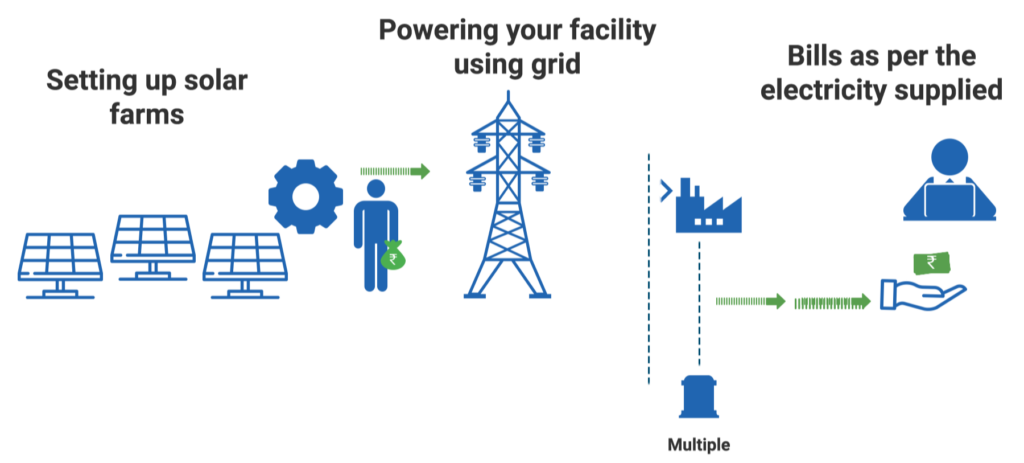
An open access solar plant works by allowing a consumer to purchase solar electricity from a large, off-site solar farm, even if they don’t have a rooftop solar installation.
The generated solar power is transmitted to the consumer through the existing public electricity grid, and the consumer is billed based on a pre-agreed Power Purchase Agreement (PPA) with the solar plant developer.
How it works?
Power Purchase Agreement (PPA): The consumer (a business or industry) signs a PPA with a solar power developer to buy electricity for a long-term period at a set rate.
Solar power generation: The solar developer builds and operates a large solar farm in a location with good sunlight.
Grid injection: The electricity generated by the solar farm is injected into the local transmission and distribution grid.
Energy transmission: The power travels through the existing grid infrastructure to reach the consumer’s location.
Consumption and billing: The consumer receives power from the grid at their meter and is billed for the units consumed according to the terms of the PPA, which is typically at a lower rate than traditional grid electricity.
What are the different types open access models?
Third-Party Open Access: The consumer enters a PPA with an external developer and pays only for the power consumed, with no upfront investment in the solar plant.
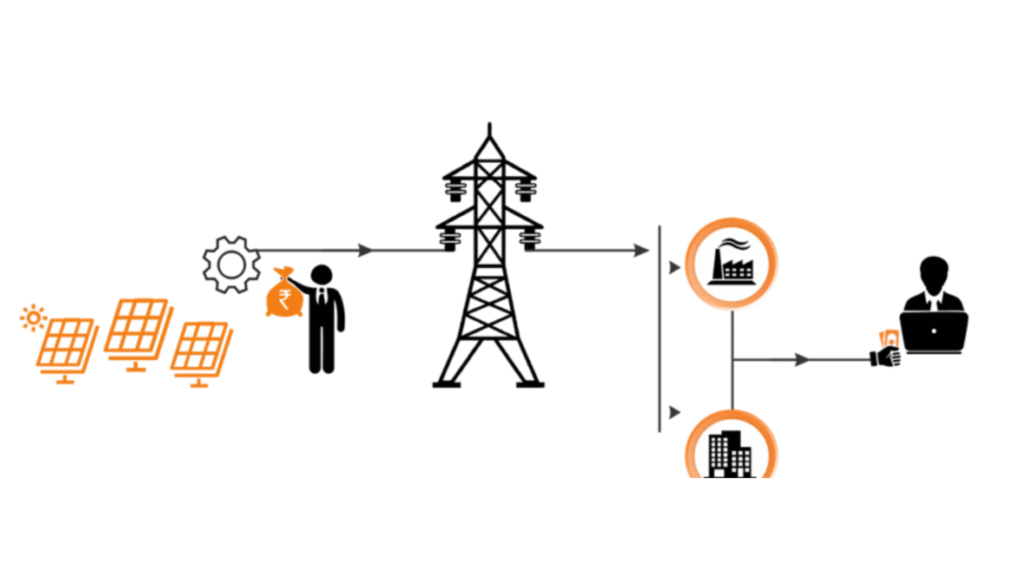
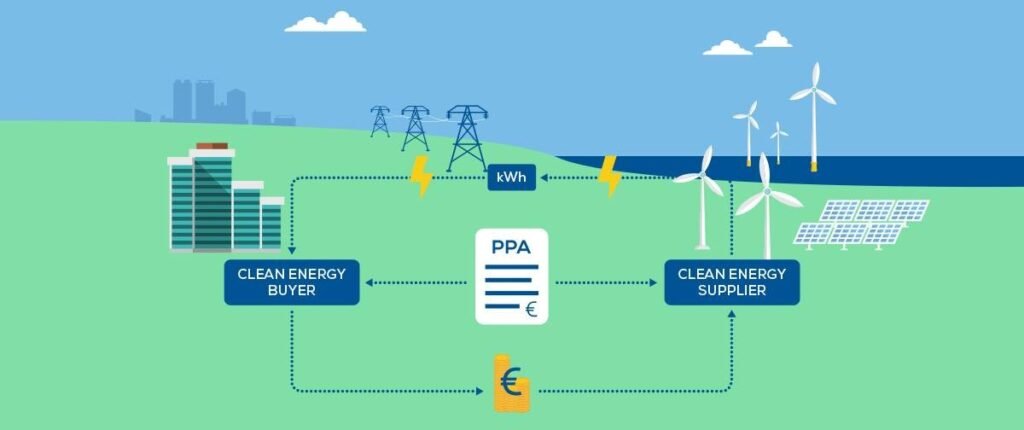
A third-party open access solar power plant is a large-scale solar farm owned by an independent developer that sells electricity to eligible consumers through a Power Purchase Agreement (PPA).
Eligible consumers, typically commercial and industrial entities with a minimum connected load of 1 MW, do not need to invest in or maintain the plant; they simply pay for the solar power they consume after it is transmitted over the existing grid.
This model allows them to source renewable energy at a potentially lower cost than traditional tariffs from their local utility, though they are subject to surcharges and grid transmission fees.
How it works?
Developer-owned plant: A solar power producer (a third-party developer) builds and owns a large-scale solar farm in a remote location.
Power Purchase Agreement (PPA): The consumer and developer sign a contract to purchase power from the plant.
Grid transmission: The electricity generated at the solar farm is fed into the national or regional grid and transmitted to the consumer’s location.
Consumer payment: The consumer pays the developer for the electricity they use, based on the PPA terms, and also pays wheeling charges for using the grid infrastructure.
No upfront investment: The consumer does not need to invest capital in building or maintaining the solar plant, as this is the responsibility of the third-party developer.
Reduced electricity costs: By purchasing power through a PPA, consumers can often achieve savings compared to their standard utility tariffs.
No land constraints: Businesses are not limited by available rooftop space and can source a much larger amount of solar energy from the off-site plant.
No maintenance worries: The consumer is free from the technical and operational burdens of maintaining the plant.
Captive Open Access
Captive Open Access: The consumer invests in and owns a portion or the entirety of the solar power plant to meet its own energy needs.
A captive open access solar power plant allows a business to invest in and consume solar power from a plant that is owned either fully by the company or by a special purpose vehicle (SPV) in which the company has a majority stake (at least 26% equity).
The business uses the power generated for its own consumption, while grid charges apply, but surcharges like cross-subsidy and additional charges are typically waived, offering cost savings and energy security.
Key Characteristics
Ownership: The consumer owns a minimum of 26% of the solar power plant’s equity.
Consumption: The company must consume at least 51% of the electricity generated by the plant.
Location: The plant can be located on-site (rooftop) or off-site (ground-mounted solar farm).
Purpose: It’s for the exclusive consumption of the captive consumer.
Cost savings: By owning a stake, the consumer can avoid certain surcharges levied on the grid, leading to lower electricity costs.
Group Captive Open Access
Group Captive Open Access: Multiple consumers collectively invest in a solar project, hold a minimum equity stake (e.g., 26%), and share the power generated.
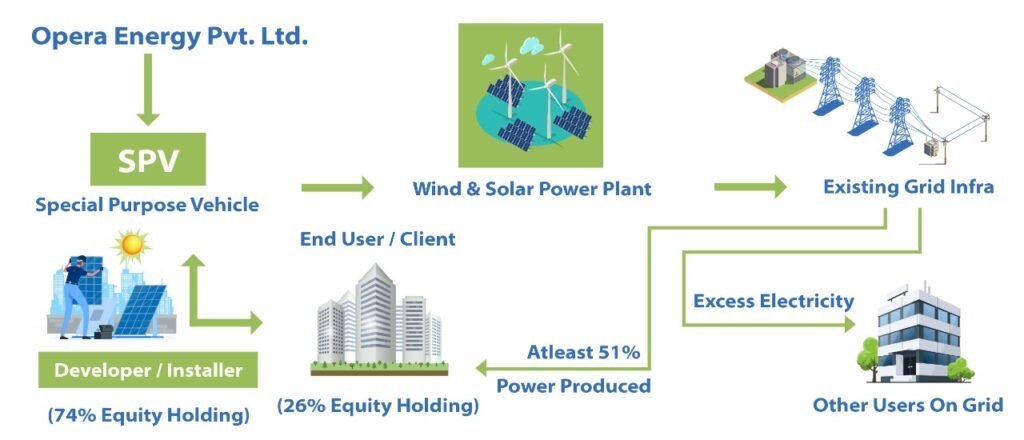
A group captive solar plant works when a group of consumers jointly invests in a solar power project, typically requiring them to own at least 26% of the plant and consume at least 51% of the generated energy.
The project is developed and the power is transmitted through the existing grid to the members’ facilities.
This model allows businesses to share the costs and benefits of solar power, with advantages like cost savings due to exemptions from certain charges.
How the model works?
Formation and ownership: A group of companies or consumers with similar energy needs form a group to invest in a solar farm. They must collectively hold at least 26% equity in the project and jointly consume a minimum of 51% of the power generated.
Project development: A solar developer often creates the project through a Special Purpose Vehicle (SPV) and offers the required stake to the group of consumers.
Financial investment: Consumers’ financial contribution is often less than the total cost because projects are often financed with a mix of debt and equity.
For example, if a project is 70% debt and 30% equity, the group only needs to invest 26% of the equity portion (about 7.8% of the total project cost).
Operation and maintenance: The developer or independent power producer (IPP) is usually responsible for operating and maintaining the solar plant.
Energy distribution: The electricity generated is distributed to the individual group members through the grid.
The consumption is typically proportional to each member’s ownership stake, with a small margin of variation allowed.
What are the benefits?
Cost savings: Group captive projects are exempt from cross-subsidy and additional surcharges, which can significantly lower the per-unit cost of electricity compared to other models.
Shared investment: By sharing the cost of a larger project, businesses with smaller budgets can access solar power without a large upfront investment.
Energy control: The partial ownership gives consumers more control over their power generation, leading to greater energy savings over the long term.
Predictable tariffs: The tariff for the power purchase agreement (PPA) is often fixed for the term of the contract, providing greater visibility on energy costs.
Ready to switch to solar energy?
Get a free, no-obligation consultation from Bangalore's trusted solar experts.
✦ Get Free Consultation ✦