A Deep Dive into Policy Gaps, Infrastructure Challenges, Cost Barriers, and Renewable Solutions
Electric Vehicles (EVs) are widely hailed as the cornerstone of sustainable transport. India’s EV market has witnessed rapid growth—but it still faces significant hurdles that slow adoption among everyday users, especially those contemplating four-wheelers. Despite policy aspirations, real-world challenges persist in incentives, infrastructure, charging costs, and home charging feasibility.
🧩 1. Lack of Adequate Government Incentives
Even though India has launched multiple EV support programs (like FAME and state EV policies), incentives are often limited and unevenly applied:
-
FAME (Faster Adoption and Manufacturing of Electric Vehicles) provides subsidies for select EV categories. Yet experts say these are often insufficient to offset the higher upfront cost of EVs—especially four-wheelers. India Brand Equity Foundation
-
Subsidies skew heavily towards two- and three-wheelers; EV cars receive smaller support relative to their higher price point. India Brand Equity Foundation
-
Some state policies that tried ambitious EV charging station expansion faced weak private participation—highlighting implementation gaps in incentive models. The Times of India
Outcome: Many potential buyers hesitate due to unclear or weak financial incentives compared to international EV incentive regimes.
🔌 2. Charging Infrastructure Still Falling Short
A persistent barrier to EV ownership is the availability and reliability of public charging stations:
📍 Patchy Network
-
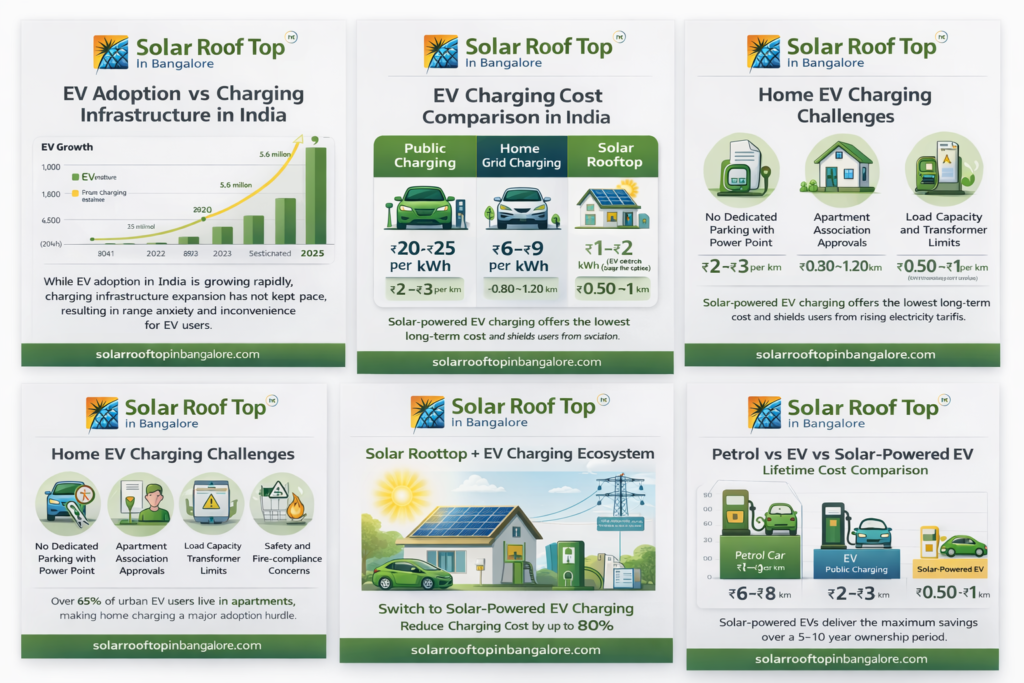
India’s public charging infrastructure is growing from around 1,800 stations in early 2022 to over 29,000 by 2025—but this growth still leaves many areas underserved. Vasudha Foundation
-
Distribution is highly urban-centric; rural regions and highways often lack adequate chargers, increasing “range anxiety” for EV owners. EV Sahi Hai
-
Experts estimate that India’s charger-to-EV ratio remains far behind leading EV markets, contributing to adoption reluctance. The Times of India
Lack of chargers deters long-distance travel plans among users who often cannot trust public charging availability.
⚡ High Installation Costs and Grid Challenges
-
Setting up EV chargers—especially fast chargers—requires expensive grid upgrades, land acquisition, and equipment. ORF Online
-
Uneven standards and multiple connector types make station interoperability confusing. EV Sahi Hai
-
Grid capacity issues at peak demand add operational complexity and sometimes limit charging speed. EV Sahi Hai
Impact: Without more affordable, accessible fast-charging infrastructure nationwide, many buyers see EV ownership as restrictive rather than liberating.
⚡ 3. Cost Comparison: Public Charging vs Home Charging
EV users generally have two ways to recharge:
🏠 Home Charging
-
Charging at home is cheaper per unit than public fast charging—electricity tariffs for residential users are lower, reducing running costs.
-
But setting up home charging has its own hurdles:
-
Limited space or parking access in high-density housing makes installing a charger difficult.
-
Grid constraints or lack of three-phase supply in urban complexes increases setup complexity.
-
⛽ Public Charging
-
Public charging, especially fast DC chargers, often charges Rs 20–25 per kWh or higher—which may make per-km cost not significantly lower than petrol/diesel vehicles in lifecycle terms. Wikipedia
-
Public chargers also come with waiting times, availability uncertainties, and reliability issues at high-demand stations. Vasudha Foundation
📊 Insight: Nearly 90% of EV owners rely on home charging; around 30% have installed solar rooftops specifically to power their EV charging—cutting costs further by using renewable power. The Times of India
🏘️ 4. Infrastructure to Charge EVs at Home: A Major Bottleneck
Most EV uptake models assume home charging—that users can plug into a dedicated charger overnight. However:
-
Apartment Complex Restrictions: Many resident associations limit installation of dedicated EV chargers due to safety concerns or lack of policy clarity.
-
Parking Layout Issues: High-rise buildings often lack designated, electrical-ready parking spots for EV charging.
-
Electric Load Limitations: Some residential grids cannot support simultaneous EV charging without upgrades.
Without seamless home charging, many urban buyers view EVs as impractical—especially if public stations require detours.
☀️ 5. Solar Rooftop Integration as a Solution
Renewable energy systems—such as solar rooftop installations—offer a compelling alternative to reduce both charging cost and grid reliance.
🌞 Solar + EV Charging Synergy
According to solarrooftopinbangalore.com, rooftop solar systems help households generate clean and affordable energy, which can in turn power EV charging and reduce dependency on conventional grid supply. Solar Rooftop in Bangalore
Benefits Include:
-
Reduced net electricity cost—especially with government schemes like PM Surya Ghar Muft Bijli Yojana, which has helped over 7.7 lakh households achieve near-zero electricity bills. The Times of India
-
Energy independence—solarpowered EV charging “decouples” user charging from grid price volatility. Tata Power
-
Optimal synergy for users in sunny geographies like Bangalore, where solar potential and EV registrations are both growing. The Times of India
📉 Cost Considerations
While solar photovoltaic (PV) panel installation has upfront costs, the long-term savings on electricity and EV charging can offset EV running costs, especially when combined with net metering or battery energy storage.
🔍 6. Broader Statistics and Market Context
-
EV registrations in India are increasing significantly, though four-wheelers still represent a smaller slice of total EV adoption compared with two-wheelers. India Brand Equity Foundation
-
Bengaluru alone stands out as a growing EV and solar hub, where solar rooftops and EV ownership tend to cluster together in a clean-energy transition model. The Times of India
-
Government schemes like PM Surya Ghar Muft Bijli Yojana aim to expand solar adoption, indirectly supporting EV charging potential. Wikipedia
📍 Conclusion: Overcoming Barriers for EV Adoption
Main Hurdles
-
Insufficient and uneven incentives for EV buyers—especially four-wheeler owners.
-
Inadequate charging infrastructure in many parts of the country.
-
High public charging costs and ambiguous cost advantages versus traditional vehicles.
-
Home charging barriers due to housing design, electrical readiness, and parking layout.
-
Grid stress and energy uncertainty, making EV charging costly and unpredictable.
Strategic Path Forward
-
Expand subsidies and incentives targeted at EV four-wheelers and home charging infrastructure.
-
Accelerate charging network deployment with uniform standards and reliability-focused metrics.
-
Promote solar rooftop + EV charging solutions to make home charging cost-effective and green.
-
Urban policy rework to mandate EV-ready parking and streamline adoption processes.
By addressing these hurdles through coordinated infrastructure, policy reform, and renewable integration, India can unlock the true potential of EV mobility—making electric vehicles more affordable, accessible, efficient, and sustainable for millions of users.
-
Petrol car: ₹6–₹8 per km
-
EV (public charging): ₹5–₹6 per km
-
EV (solar charging): ₹0.50–₹1 per km